
INSIGHTS
The Reality of Import Substitution Policy in Cameroon
1. Introduction
The supply constraints that are characterised by inadequate quality infrastructure, climate volatility, science and technology adoption, access to credit, land tenureship, increasing input costs, government inconsistent policy and insecurity due to succession militancy have led to low food system performance, which over the years has led to rising food imports in Cameroon. Mitigating these challenges will expand the food system performance and serve as a resilience to the threatening food insecurity. Besides, the growing population, which is 29 million as of 2024 with an annual average of about 3%, increasing urbanisation and youth population, and the rising income and wealth in the cities have led to the expansion of food demand (USDA-GAIN, 2025) 1 that is not met domestically, but with a complement from food imports.
However, the devastating impact of the COVID-19 pandemic and the ongoing war in Ukraine has shed light on the unsustainability and unreliability of food imports, especially for staple foods such as maize, rice, wheat, fish and palm oil (Fuli, 2025). The food price hike and the consequences of the food imports for the domestic producers and the food system’s income earners have led to policy tweaking and repurposing to encourage and ensure domestic food system self-reliance and self-sufficiency. Thus, to accomplish this, there is a need for a policy that ensures increased domestic food production and sectoral creation of wealth, which form the basis for the introduction and implementation of the Import Substitution Policy (ISP) from 2024 in Cameroon.
The Reality of EU-Africa Trade Relations
The two sides are far from being preferential partners. Their trade with otherregions of the world is more extensive, the balance a disappointment. What are thereasons?
All views expressed in the Welternährung are those of the authors and do notnecessarily reflect the view or policies of the editorial board or of Welthungerhilfe.
1. Introduction
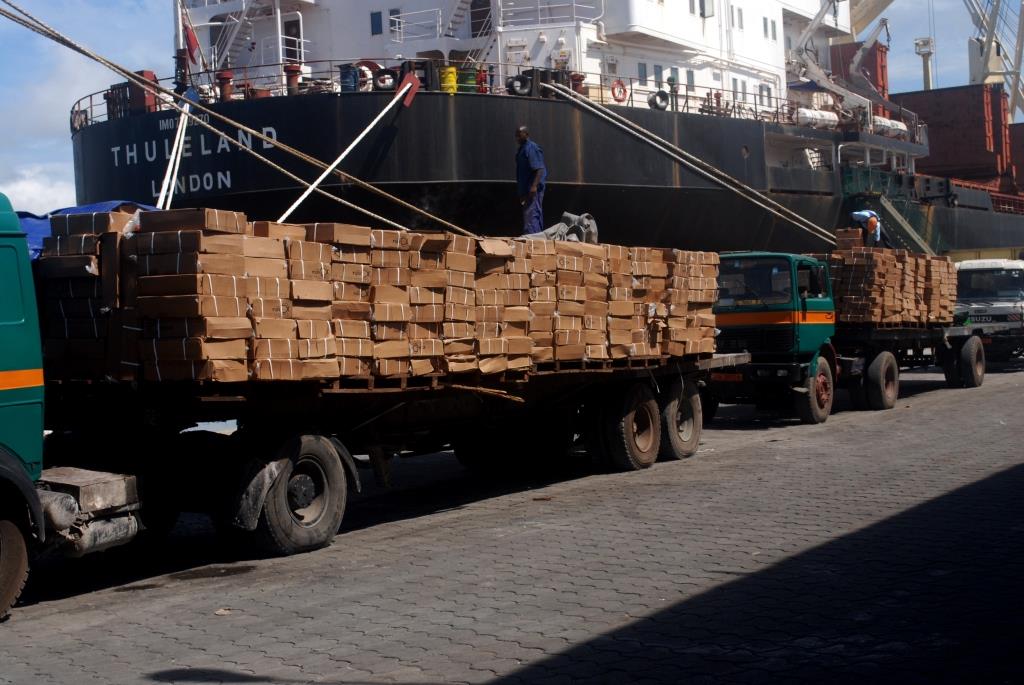
The economic interaction between Europe and Africa is traced back to the precolonial and colonial periods, when Africa served as a veritable source of raw materials for the European industrial sector (Kareem, 2011). This economic relationship gradually tilted towards trade interactions. Trade relations between the European Union (EU) and Africa continue to date, particularly between those countries that have had a colonial affinity. This is one of the bases for the assertion that the EU is “Africa’s traditional trade partner”. The initial structure and pattern of the trade relations fall within the scope of inter-industry trade, where trade took place across different industries and products, e.g. Africa exported raw commodities to the EU and imported finished and semi-finished goods. This was characteristic of the pre- and early post-independence periods for many African countries, where the EU conducted about one-tenth of its total trade with Africa,while about half of Africa’s total trade was with the EU (IMF IMTS, 2025) (See figures 1 and 2).
However, the discovery of mineral resources, e.g. crude oil, in commercial quantities in Africa adversely affected the agri-food systems, thereby de-prioritising the sector in its development agenda, even though the bulk of the population is engaged in it. This led to the threat of severe food insecurity in many countries (Kareem et al., 2025). Moreover, the then-nascent extractive industries demanded huge investment in capital-intensive production. To overcome this food insecurity and to acquire the equipment required for production, there is a need for imports, which were largely from the EU. Besides, the African population increased almost sevenfold, from 228 million in 1950 to over 1.5 billion in 2024 (UNCTADstat, 2025), necessitating increased imports from the EU.
This extended the trade structure between the EU and Africa to intra- and inter-industry trade. The intensity and extensiveness of EU exports to Africa, particularly of machinery, are essential for the development and expansion of the real sector. However, agri-food export to Africa is a double-edged sword: it supports the continent’s resilience to food insecurity, but at the same time has consequences for domestic agri-food systems (see Kareem, 2025; Shiferaw and DiCiommon, 2023).
Despite the preponderance of EU agri-food exports to Africa, in addition to manufactured and intermediate goods, the EU’s trade share with Africa has plummeted over the years. EU exports, particularly agri-foods, have faced tremendous safeguard measures in Africa because heavily subsidised EU agri-food exports have distorted domestic market prices. Although the EU remains Africa’s main and traditional trade partner, EU market access conditions have impacted Africa’s export performance, so that Africa has been redirecting its trade to Asian countries, particularly to China and India. However, there is now an opportunity for realignment, especially at this time when there are multiple global crises and the US, which is the EU’s main trade partner, is imposing restrictive and punitive trade policy measures, particularly mega and prohibitive tariffs. The EU and Africa can leverage their traditional economic relations to expand trade interactions.Africa has a large market that the EU can explore to redirect its trade, as analternative to the US market, and complementing other third-party negotiated trade agreements, including recently with the Latin American Mercosur, India,Indonesia, and the United Arab Emirates. The EU should also provide an enabling trade policy environment for Africa to ensure a win-win situation.